When is a dog considered senior? Age by size and breed
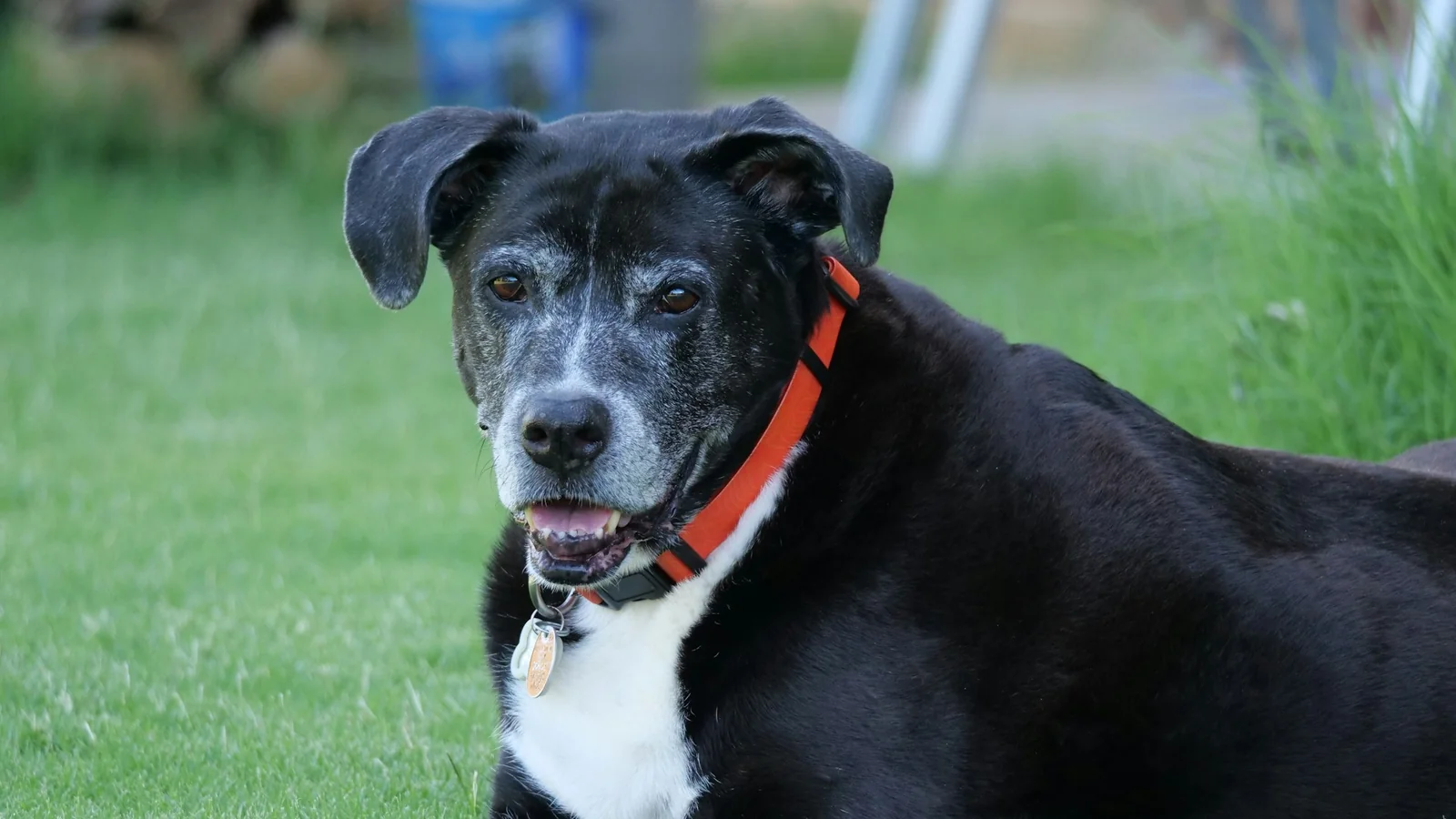
Not veterinary advice: This article is for general information and isn’t a substitute for professional veterinary advice. Always talk with your veterinarian before changing your dog’s diet, supplements or medications, or if you notice new symptoms.
Short answer: most small dogs are considered senior at about 8 to 11 years, medium dogs at 8 to 10, large dogs at 8 to 9 and giant breeds at 6 to 7, according to the American Veterinary Medical Association (AVMA). It depends on breed and on the individual dog, so your vet has the final word.
If you’ve noticed a few gray hairs on a muzzle, a slower start on morning walks, or a birthday that made you stop and do the math, you’re in good company. This guide explains where those ages come from, why different charts disagree, and what to do when your dog gets there.
Key takeaways
- Size drives it. The bigger the dog, the earlier “senior” starts.
- AAHA’s rule of thumb: a dog is senior in the last 25% of their estimated lifespan, which depends on breed and size.
- Charts differ by a year or two. AVMA, PetMD and VCA don’t match exactly, so treat any chart as a starting point.
- What to do: ask your vet about twice-a-year checkups, baseline tests, weight and muscle, and mobility.
On this page
- Senior dog age chart by size
- Why different charts disagree
- Why big dogs become seniors sooner
- Breed, mixed breed and the individual dog
- “Is a dog year really seven human years?”
- What actually changes when a dog is “senior”?
- Early signs your dog may be moving into the senior stage
- What to do when your dog reaches the senior window
- When to call your vet
- Frequently asked questions
- The bottom line
Senior dog age chart by size
Veterinary groups don’t use a single calendar age. The American Animal Hospital Association (AAHA) defines a senior dog as one in the last 25% of their estimated lifespan, and that lifespan depends on the breed and size of the dog (AAHA Canine Life Stage Definitions). The American Veterinary Medical Association (AVMA) says the same thing in plain language: dogs “don’t have a universal age of seniority” because they vary so much in size, so experts suggest treating a dog as senior in the last quarter of the expected lifespan for their breed (AVMA: Caring for senior cats and dogs).
In practice, that works out to roughly this, by size:
| Dog size | Typical senior age (AVMA) |
|---|---|
| Small or toy (under 20 lb) | 8 to 11 years |
| Medium (20 to 50 lb) | 8 to 10 years |
| Large (50 to 90 lb) | 8 to 9 years |
| Giant (over 90 lb) | 6 to 7 years |
Source: AVMA, which says it used American Kennel Club data to translate “the last 25% of life span” into ages. Checked October 27, 2026.
A few things to keep in mind as you read that table:
- These are averages, not deadlines. Your dog doesn’t flip a switch on a birthday.
- Different reputable sources land in slightly different places (more on that next), which is a sign that the exact age is a rule of thumb.
- Your vet’s judgment beats any chart. If your dog is in the senior window, or close to it, it’s a good time to ask what a senior care plan should look like.

Why different charts disagree
If you’ve searched this topic before, you’ve likely seen numbers that don’t match. That’s normal. Here’s how three reputable sources describe it, all read on October 27, 2026:
| Size | AVMA | PetMD (vet-written) | VCA Animal Hospitals |
|---|---|---|---|
| Small | 8 to 11 years (under 20 lb) | 10 to 12 years | about 9 to 11 years (20 lb or less) |
| Medium | 8 to 10 years (20 to 50 lb) | 8 to 10 years | about 7 to 9 years (21 to 50 lb) |
| Large | 8 to 9 years (50 to 90 lb) | 8 to 9 years | about 6 to 7 years (51 to 100 lb) |
| Giant | 6 to 7 years (over 90 lb) | 6 to 7 years | about 4 to 5 years (over 100 lb) |
Sources: AVMA, PetMD, “When Is a Dog Considered a Senior?” (updated Dec. 29, 2025), and VCA, “When is your dog or cat considered a senior?”.
Why the differences? The size cutoffs aren’t identical (VCA’s “large” band goes up to 100 pounds, AVMA’s stops at 90), and each group is making a practical judgment about when to start extra care. Some lean earlier, so that screening begins before problems show up. None of them is “wrong.” If you want a single, simple rule: the bigger the dog, the earlier it makes sense to think senior, and when in doubt, start the conversation with your vet a little early.
Cornell’s Riney Canine Health Center puts the extremes in a sentence: a giant breed such as a Great Dane could be considered a senior at age six, while a Chihuahua may not be a senior until their 11th birthday (Cornell Riney Canine Health Center, November 2025). Cornell also calls the point at which we consider a dog senior “somewhat arbitrary,” which is a good reminder that the real goal is a care plan built around your dog.
Why big dogs become seniors sooner
It surprises a lot of people that, within a species, bigger usually means shorter-lived. Dogs are an extreme example.
- A 2013 study in The American Naturalist looked at death data from 74 dog breeds. The researchers found no clear link between body size and when aging begins, but a strong relationship between size and how fast dogs age. Their conclusion, in their words: “large dogs die young mainly because they age quickly” (Kraus, Pavard & Promislow, 2013).
- A large study of owned dogs in England, covering 5,095 confirmed deaths from veterinary practice records, found an overall median lifespan of 12.0 years. The longest-lived breeds in that study were the Miniature Poodle, Bearded Collie, Border Collie and Miniature Dachshund; the shortest-lived were the Dogue de Bordeaux and the Great Dane. Higher body weight was linked to shorter life, and crossbred dogs lived about 1.2 years longer than purebreds on average (O’Neill et al., The Veterinary Journal, 2013).
A fair caution: that second study used records from dogs seen at English vet practices, so it’s a snapshot of one population, not a guarantee for any individual dog. It’s here to show the pattern (size and breed matter), not to predict your dog’s lifespan.
Breed, mixed breed and the individual dog
Because “senior” is tied to expected lifespan, breed matters beyond size alone. A giant breed with a shorter typical lifespan reaches the last quarter sooner than a small breed with a longer typical lifespan, even if two dogs are the same age on paper. AAHA notes that estimating an individual dog’s lifespan is “generally predicted by breed lifespan,” and the veterinary team uses that estimate to time preventive care (AAHA).

What if you have a mixed-breed dog or a rescue with an unknown birthday?
- Adult size is the most practical guide. Use the size bands above as a starting point.
- Your vet can estimate age from the exam. Cornell notes that veterinarians look at the eyes for lenticular sclerosis (a hazy look to the lens that can begin around age seven and eventually occurs in all dogs) and at the teeth, though both vary a lot from dog to dog (Cornell, November 2025).
- If you’ve done a DNA test, share the results with your vet; breed mix can hint at common health risks.
And what about the individual? Tufts’ Cummings School of Veterinary Medicine makes the point that just because a pet turns 7, 10 or even 15 “doesn’t necessarily mean she’s biologically ‘old’.” Aging depends on breed, genetics and health problems (Tufts Petfoodology). The AVMA also says excess weight can have a major effect on a senior pet’s health, with obesity linked to a higher risk of arthritis, diabetes, heart disease and other conditions, so a birthday count is only part of the story (AVMA).
“Is a dog year really seven human years?”
No. The AVMA says plainly that, “contrary to popular belief, dogs do not age at a rate of 7 human years per dog year” (AVMA). Cornell makes the same point and shows why the old rule breaks down: it would make a 14-year-old dog 98 “human years” and would treat a 2-year-old Pomeranian and a 2-year-old Newfoundland as identical (Cornell, November 2025). AAHA’s own life-stage guidelines deliberately avoid human-age equivalents and focus on life stage and characteristics instead.
What actually changes when a dog is “senior”?
Age on its own isn’t a disease. The abstract of AAHA’s 2023 Senior Care Guidelines says veterinary professionals are taught to recognize that “old age is not a disease,” and the AVMA says the same: age is not a disease. The point of senior care is to maintain quality of life (2023 AAHA Senior Care Guidelines for Dogs and Cats).
Still, older dogs are more likely to develop certain problems. The AVMA lists heart disease, kidney or urinary tract disease, liver disease, diabetes, joint or bone disease, overweight or obesity, and vision or hearing loss among the common ones, and notes that cancer is the cause of death in almost half of dogs over 10 (AVMA). That’s the reason the senior stage changes the vet plan:
- More frequent exams. The AVMA recommends senior pets see a veterinarian twice a year or more, and the Merck Veterinary Manual’s owner guide says the same for senior dogs (AVMA; Merck Veterinary Manual: Routine Health Care of Dogs).
- Regular screening tests. AAHA’s senior guidelines list a complete blood count, blood chemistry and urinalysis every 6 to 12 months for senior dogs, and annual blood pressure and thyroid (T4) checks, among other tests your vet may tailor to your dog (AAHA: Diagnostic Tests and Recommended Frequencies for Senior Dogs and Cats).
- A closer look at weight, mobility, teeth, brain and senses. The AVMA’s list of what to watch includes arthritis signs, behavior changes, vision and hearing, weight and home environment.
Think of it as moving from “annual checkup” to “regular maintenance and early detection.”
Early signs your dog may be moving into the senior stage
Each of these deserves a note to your vet, not a shrug. They’re common, but they aren’t always “just old age”:
- Slowing down, stiffness, reluctance to jump, use stairs or get into the car (the AVMA lists these among possible arthritis signs)
- Sleeping more, or changes in sleep patterns
- Changes in appetite, weight or thirst
- Gray muzzle or coat (the AVMA lists a graying haircoat among the outward signs of aging, and reminds owners that the body is changing on the inside too)
- A bluish haze in the eyes, and slower responses to voice commands or sounds
- Confusion, wandering, new anxiety, or house-soiling accidents (the AVMA lists these among signs of cognitive dysfunction)
PetMD adds that a hazy, bluish look to the lens (nuclear sclerosis) can resemble cataracts but doesn’t usually affect vision the way cataracts do, which is a good example of something your vet can tell apart in a few minutes (PetMD).
We’ll go deeper on several of these in upcoming guides (see “Related guides” below).
What to do when your dog reaches the senior window
You don’t need to overhaul everything overnight. A calm, practical starting list:
- Book a senior wellness exam. Ask your vet whether your dog is in the senior stage, and what baseline bloodwork, urine and blood pressure checks make sense now.
- Ask for a weight and body-condition check. Many dogs gain weight as activity drops, and others lose muscle. Your vet can score both fat and muscle.
- Ask about mobility. Describe any slowing down, even small changes, and mention if they avoid stairs or slick floors.
- Talk through diet. A senior diet isn’t automatically necessary; it depends on your dog. (Our guide to senior dog food explains how to think about this.)
- Make the house easier. Non-slip rugs, a supportive bed and gentle ramps or steps can help early. (See slipping on hardwood floors.)
- Keep a short log or take a few videos. Dates of changes in appetite, mobility, sleep or behavior make your vet visits far more useful.
- Plan the budget. Older dogs often need more vet care. Pet insurance has enrollment rules and exclusions that differ by company, so check insurer terms directly. (A guide to pet insurance for older dogs is coming soon; see our costs and insurance hub.)
When to call your vet
Aging is normal, but these changes shouldn’t be written off as “just old age.” Call your vet promptly if your dog has:
- Sudden or fast weight loss, or a big change in appetite or thirst (the AVMA notes that sudden weight loss in a senior pet often means something is wrong)
- New or worsening limping, stiffness, or trouble standing
- Confusion, getting lost in familiar places, or night-time wandering
- Persistent vomiting or diarrhea, or accidents indoors
- A new lump, bump, or non-healing sore (the AVMA lists these among possible signs of cancer, which is the cause of death in almost half of dogs over 10)
Call your vet or an emergency clinic right away if your dog collapses, has labored or noisy breathing, has pale or blue gums, a swollen or hard belly, sudden paralysis or inability to stand, a seizure, repeated vomiting, or hasn’t eaten or had water for 24 hours or more. This list isn’t complete. If something feels wrong, trust your instinct and call.
Frequently asked questions
Is a 7-year-old dog a senior?
It depends on size. For a giant breed, 6 to 7 is within the typical senior window by AVMA’s chart. For a small dog, 7 is below AVMA’s usual senior range of 8 to 11 years. Even so, the Merck Veterinary Manual’s owner guide says dogs over 7 to 8 years old should see the vet twice a year or more (Merck), so it’s often a good age to start a “senior-style” checkup schedule regardless of size.
Is a 10-year-old dog old?
For most dogs over about 20 pounds, 10 is at or past the usual senior age. For a small dog, 10 is often within the senior range, which the AVMA puts at 8 to 11 years.
At what age is a Labrador, Golden Retriever or German Shepherd a senior?
These breeds generally fall in the large-dog category, and the AVMA’s range for large dogs is 8 to 9 years. Other sources start earlier: VCA’s large-dog range is about 6 to 7 years (see the comparison table above). Individual dogs vary, so use that as a starting point and ask your vet.
Does a gray muzzle mean my dog is senior?
Not on its own. The AVMA calls a graying haircoat one of the easy-to-spot outward signs of aging, but says a pet’s body is also changing on the inside, which is why regular vet exams matter. In our view, the size-based age ranges above and your vet’s assessment are better guides than coat color.
How often should a senior dog see the vet?
The AVMA and the Merck Veterinary Manual both say twice a year or more. Your vet may recommend more often if your dog has a health condition.
Can I use a “senior dog age calculator”?
Be careful with them. AAHA’s life-stage guidelines intentionally don’t equate dog years to human years, and the AVMA says the “7 years per dog year” idea is a myth. A calculator can be fun, but your vet’s estimate of your dog’s life stage is what matters.
Do senior dogs need senior dog food?
Not automatically. It depends on your dog’s weight, muscle, joints and health. We cover this in our guide to senior dog food.
The bottom line
“Senior” is a stage, not a number. For most dogs the window opens somewhere between 6 and 12 years old, earlier for giant breeds and later for small ones, and your vet can tell you when it applies to your dog. What matters most is that you notice small changes, keep up with regular checkups, and make your home and routine a little easier as the years go by.
Not veterinary advice: This article is for general information and isn’t a substitute for professional veterinary advice. Always talk with your veterinarian before changing your dog’s diet, supplements or medications, or if you notice new symptoms.
Sources
All pages below were opened and read on October 27, 2026. PubMed links go to the study abstracts.
- AVMA. Caring for senior cats and dogs.
- AAHA. Canine Life Stage Definitions (2019 AAHA Canine Life Stage Guidelines).
- Dhaliwal R, et al. 2023 AAHA Senior Care Guidelines for Dogs and Cats. J Am Anim Hosp Assoc. 2023;59(1):1-21.
- AAHA. Diagnostic Tests and Recommended Frequencies for Senior Dogs and Cats.
- Cornell University College of Veterinary Medicine, Riney Canine Health Center. Caring for your Senior Dog (November 2025).
- Tufts Cummings School of Veterinary Medicine, Petfoodology. When Should I Switch My Pet To A Senior Diet?
- Merck Veterinary Manual (Dog Owners). Routine Health Care of Dogs.
- PetMD. When Is a Dog Considered a Senior? (secondary source; used to compare size ranges).
- VCA Animal Hospitals. When is your dog or cat considered a senior? (secondary source; used to compare size ranges).
- Kraus C, Pavard S, Promislow DE. The size-life span trade-off decomposed: why large dogs die young. Am Nat. 2013;181(4):492-505.
- O’Neill DG, et al. Longevity and mortality of owned dogs in England. Vet J. 2013;198(3):638-643.
Related guides
This page is the hub for our senior-dog guides. More are on the way.
- Senior dog food: do older dogs really need a senior diet?
- Senior dog back legs weak? Causes, red flags and what to do
- Senior dog slipping on hardwood floors: a room-by-room fix
- Senior dog panting at night and restless: what to check first
- Dog dementia (canine cognitive dysfunction) and night-time confusion (coming soon)
- Pet insurance for older dogs: what to check first (coming soon)
- Do big dogs age faster? (coming soon)
Browse everything in Breed & Age and Senior dog health.
Written by the SeniorPupLife Editorial Team. Last updated: October 27, 2026. This article has not been reviewed by a veterinarian.