Senior dog slipping on hardwood floors: a room-by-room fix
Not veterinary advice: This article is for general information and isn’t a substitute for professional veterinary advice. Always talk with your veterinarian before changing your dog’s diet, supplements or medications, or if you notice new symptoms.
If your senior dog is skating across the kitchen, splaying out in the hallway or refusing to cross the living room, you’re not imagining it, and you’re not alone. The quickest first step is to lay non-slip runners along the paths your dog uses most, then get your vet’s help working out why the slipping started. This guide walks through your home room by room, with fixes at different budgets, and explains when slipping is a reason to call your vet.
Key takeaways
- Hard floors are hard on older paws. Vets describe dogs on slick floors walking with a short, cautious stride, and older dogs may move less as a result.
- Start with paths. Runners or yoga mats from the bed to the food bowl to the door, with a non-slip backing, are an easy first move.
- Don’t skip paw care. Short nails and trimmed fur between the pads help your dog’s own traction.
- Traction products are trial and error. Sprays, stickers, socks and toe grips work for some dogs, and the research on them is thin.
- New or worsening slipping deserves a visit to your vet. It can be an early sign of pain, arthritis or a nerve problem.
Why hardwood floors are so hard on older dogs
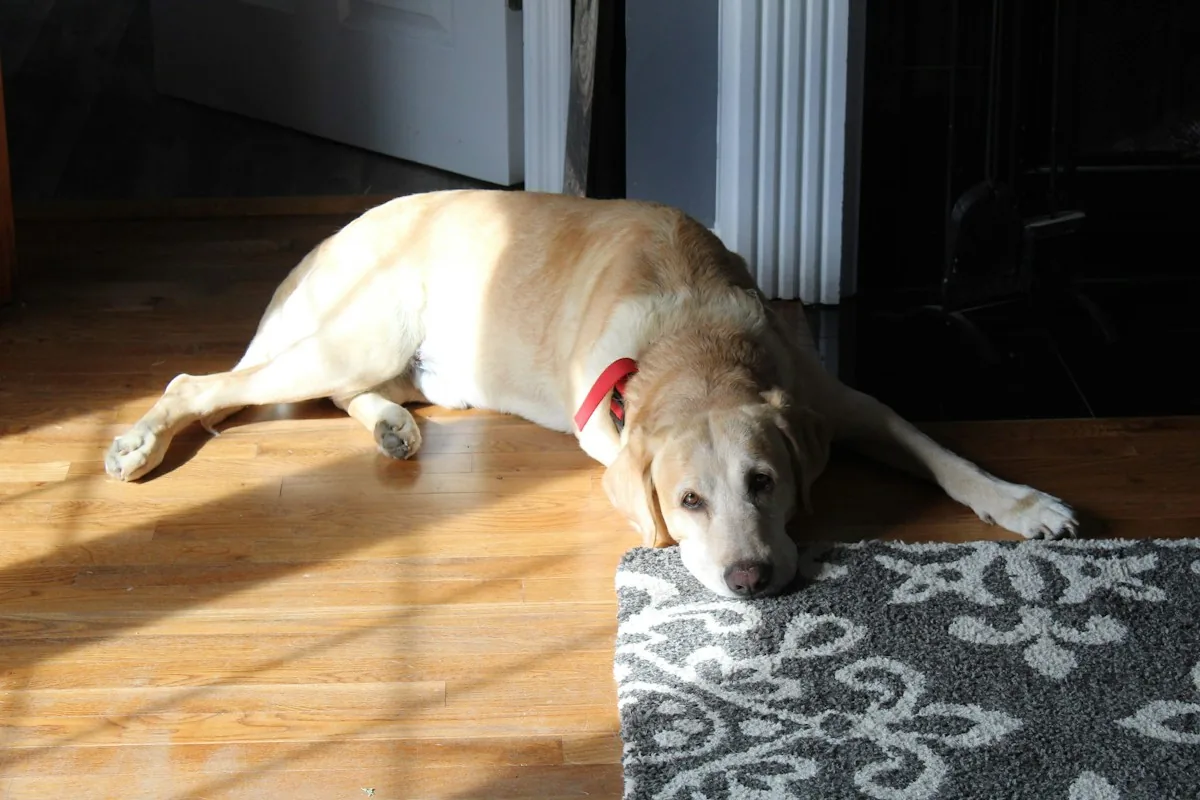
Hardwood, laminate and tile look great and clean easily, but they’re slick. VCA’s mobility guide says these floors are “much more difficult to walk and run on securely,” and notes that dogs that have fallen before, or that have mobility concerns, often walk cautiously with a short stride and a hunched back. Over time, VCA says, that posture can lead to muscle stiffness and soreness and to less activity around the house (VCA Animal Hospitals).
There’s also a paw-level reason. Roush and colleagues at Kansas State University write that a frequent response of dogs to slick surfaces is to flex the digits and engage the toenails rather than the textured digital pads, which can mean poorer grip on a hard surface (Frontiers in Veterinary Science, 2017). In other words, a dog who is nervous on a slippery floor may grip less well, not more.
Slips can also lead to injuries. The same authors say that in their clinical experience, dogs that are weak or unsteady from neurologic or orthopedic problems sustain new injuries, or worsen existing ones, at “surprising frequency” from slipping and falling. That’s the reason to treat slick floors as a home-safety issue, not just an annoyance.
First, ask why your dog is slipping
Floors are only part of the story. BluePearl’s Dr. Julia Spade says older pets can become less steady on their feet because of conditions including osteoarthritis, other musculoskeletal disease, pain, neurologic disease or systemic illness, and advises asking your veterinarian if you notice trouble with mobility (BluePearl: Easy Tips to Prevent Pet Slips).
AAHA’s dog pain checklist lists “difficulty walking or running, particularly on wood or tile floors or stairs” among the signs of pain (AAHA dog pain checklist). Its page on common pet pain signs also lists reluctance on slick floors (AAHA: What’s Wrong? Common Pet Pain Signs).
So the plan is two-part: make the floors safer now, and ask your vet about the cause. If the slipping is new or getting worse, book an exam. AAHA’s client handout is clear on one point: never give your dog pain medication without talking to your veterinarian (AAHA dog pain handout). Human pain relievers can be toxic to dogs.
If your dog’s back legs are weak, knuckling or giving out, read our guide on senior dog back legs weak: causes, red flags and what to do too.
See your home the way your dog does
Before you buy anything, VCA suggests a simple exercise: get down at your dog’s level and look at what they have to walk over or around, and note any sharp corners. VCA also suggests recording your dog moving through the house in slow motion, paying close attention to the feet and posture on different surfaces. A shorter stride or a hunch around the shoulders or back may show where your dog is struggling (VCA).
That video is also a great thing to show your vet.
Room-by-room fixes
Hallways and main paths: non-slip rugs and runners for senior dogs
Think “path,” not “wall-to-wall.” BluePearl suggests yoga mats (easy to clean) or carpet runners to create a path your pet can follow, and making sure the path leads to their food dishes, beds and the places they go to eliminate. The page says pets may not notice the path at first, but over time they come to realize they have better footing (BluePearl).
A few practical rules:
- Use non-slip backing. BluePearl notes the backing also protects people from slipping on the rug or mat.
- Vet schools suggest the same. Cornell’s management list for degenerative myelopathy includes rugs, carpets or yoga mats on hardwood or tile, and its osteoarthritis page mentions non-slip rugs (Cornell: degenerative myelopathy; Cornell: osteoarthritis).
- No raised edges. VCA says to make sure rugs and runners are non-slip and have no raised corners or edges that could trip your dog.
- Overlap or butt the runners so there are no bare “ice patches” along the route. (This is our practical tip, not a quote from a source.)
- Keep the layout steady. Cornell’s senior-dog guidance suggests keeping routines steady, including not moving dog beds or furniture, and the AVMA advises against rearranging furniture for pets with failing eyesight (Cornell; AVMA). Add runners where your dog already walks rather than creating a new route.
Living room and furniture
If your dog still hops on and off the sofa, VCA says to make sure there are non-slip rugs where they land. Better still, offer pet stairs or a ramp so your dog doesn’t have to jump; BluePearl suggests pet stairs for dogs struggling to get on furniture. VCA adds that your vet will tell you whether it’s safe for your dog to keep using furniture at all, and that you can teach your dog to use stairs or ramps with time and encouragement.
The AVMA lists orthopedic pet beds, raised feeding platforms, and pet stairs and ramps as examples of home changes that can help a dog with arthritis feel more comfortable.
Kitchen and feeding area
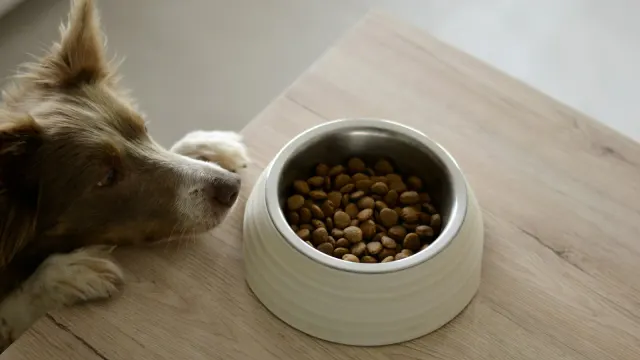
Mealtime is a surprisingly slippery moment, because dogs stand in one spot while they eat. BluePearl explains that slipping and sliding while eating can cause discomfort and pain and, eventually, an aversion to eating. Its fix is to put a rug or mat under the food bowl, large enough for all four paws, and to raise the bowl slightly.
VCA adds that elevating bowls to a level that is more comfortable can make eating and especially drinking easier, often somewhere between the dog’s elbow and shoulder. It also points out that dogs who find it hard to drink may drink less, which can lead to problems such as urinary tract infections and dehydration. If your dog seems to be eating or drinking less, tell your vet.
Stairs
BluePearl suggests covering each step with a non-slick surface such as adhesive carpet squares or anti-slip treads. VCA suggests a carpet runner or stick-down grip tape, and says your vet may recommend avoiding all unnecessary stairs, in which case baby gates may be the best solution. A harness designed to support your dog’s weight can help you help them up and down.
For outdoor steps, VCA suggests a ramp with good traction. It should be sturdy, not slip, and be built so your dog can’t fall off the side, and your dog will need time to get comfortable using it.
Bedroom and sleeping spot
VCA says the ideal bed for a dog with mobility trouble may be a recessed orthopedic bed that doesn’t require climbing onto it, ideally with a washable cover because accidents can be more frequent in dogs with mobility problems. VCA also suggests choosing bedding that doesn’t hold heat. It also helps, in our view, to put the bed on a rug rather than bare wood, so your dog can stand up without slipping. If your dog also pants or paces at night, read what to check first when a senior dog is panting and restless at night.
Doorways, yard and car
Think about the “edges” of the house too: the threshold, the back step, and the car. VCA points out that any dog can get hurt jumping into or out of a car, and this is especially true with mobility problems. For dogs too large to lift, it suggests folding car ramps or support harnesses. A separate guide on choosing a ramp is coming soon.
Corners and clutter
VCA suggests minimizing clutter and tight spaces that need sudden changes of direction, which can be hard on joints or lead to falls, and padding sharp corners like fireplace hearths or hard furniture edges. It even suggests pool noodles as cheap padding.
Paw care: your dog’s built-in traction
Floor coverings only do half of the job. Your dog’s feet do the rest.
- Keep nails short. VCA says keeping nails short and trimming fur that extends between the toes can increase traction, and that most dogs need nails trimmed at least once a month. Its blunt comparison: long nails are like putting high heels on a grandparent and asking them to walk on an ice rink. Cornell’s senior-dog guidance also suggests keeping nails and the hair on the feet trimmed to help with walking.
- Trim the fur between the pads. BluePearl says overgrown fur between the digital pads and the larger pads can reduce the traction the pads normally provide, and can be gently trimmed to the level of the pads with scissors or clippers.
- If nail trims are stressful, ask your vet or a groomer for help. Never force it, because a frightened dog may fight harder and get hurt.
Traction products: what to know
There’s a lot on offer, and honesty matters here. BluePearl reviews several options, with pros and cons, and says that no single option works for every pet, so it may take trial and error to find what suits yours (BluePearl).
| Option | What BluePearl says | Things to weigh |
|---|---|---|
| Paw traction sprays | Easy to apply, gives a bit of extra traction | Modest effect |
| Paw-pad stickers | Easy to apply and most dogs don’t mind | Quick to fall off when wet or if your dog is active outdoors |
| Socks, booties, rubber boots | Easy to apply | Some dogs dislike the feel, and you may need to try several types for fit |
| Nail grips (rubber caps on the nails) | Can improve each nail’s ability to grip | A learning curve to place them correctly; some dogs don’t tolerate them |
VCA says to talk with your vet or a rehabilitation therapist before trying nail caps, pad coverings or boots, since options work differently on each pet.
What does the research say? Not much yet, and it’s mixed.
- In a 2017 study of 15 healthy dogs, toe grips produced small changes in gait that the authors considered unlikely to matter clinically. The authors did not measure how much friction the grips added, and they said more studies are needed in dogs with arthritis or mild neurologic problems (Frontiers, 2017).
- A 2022 study of 30 dogs in the first two weeks after knee surgery (TPLO) compared nail grips with sham grips. It found no benefit in the measures used, including owner-reported walking on slippery floors, though the grips were well tolerated and the authors called for more research (Animals, 2022).
That doesn’t mean products can’t help an individual dog. It means rugs, paw care and a safer layout deserve to come first, and any gadget deserves a trial period with your vet’s okay.
Fixes at different budgets
| Budget | Ideas drawn from the sources |
|---|---|
| Lowest cost | Yoga mats or runners along main paths (BluePearl), a mat under the food bowl, trimmed nails and foot fur, pool noodles on sharp corners (VCA) |
| Some spending | Non-slip rugs or runners with grip backing, stair treads or grip tape, a raised bowl, pet stairs for the sofa |
| Bigger projects | A ramp for steps or the car, a recessed orthopedic bed, carpeting a room your dog uses constantly (VCA says carpeting the whole home is an option but that most people will do rugs and runners where their dog spends the most time) |
We don’t list prices because they vary a lot by store and region. Check what’s available locally before you buy.
When to call your vet
Call your vet promptly if your dog:
- Has started slipping, falling or avoiding floors and stairs that were fine before
- Seems stiff after resting, reluctant to rise, or won’t jump anymore
- Scuffs the toenails, or the paws flip over (knuckling), or the back legs give out
- Has accidents, or seems restless, pants at rest, or has trouble getting comfortable (AAHA lists these among signs of pain; see our guide to a senior dog panting at night and restless)
- Falls and then cries out, can’t get up, or seems painful
Call your vet or an emergency clinic right away if your dog collapses, has labored or noisy breathing, has pale or blue gums, a swollen or hard belly, sudden paralysis or inability to stand, a seizure, repeated vomiting, or hasn’t eaten or had water for 24 hours or more. This list isn’t complete. If something feels wrong, trust your instinct and call.
Frequently asked questions
Why is my senior dog suddenly slipping on hardwood floors?
There may be a floor-related reason, such as long nails or fur between the pads. But slipping can also be a sign of pain, arthritis or a neurologic problem, according to BluePearl and AAHA. If it’s new or getting worse, ask your vet to examine your dog.
What can I put on hardwood floors for a senior dog?
Runners, area rugs or yoga mats with non-slip backing and no raised edges, placed along the routes your dog uses, are the options named by BluePearl and VCA. Make sure the rugs themselves don’t slide.
Do dog socks and booties help with slipping?
BluePearl says socks, booties and rubber boots are easy to apply and may decrease slipping, but some dogs dislike them and you may need to try several types. VCA suggests checking with your vet or a rehabilitation therapist first.
Do toe grips work?
Research so far is limited. A small study in healthy dogs found minor gait changes, and a study after knee surgery found no benefit in the first two weeks. Neither study tested long-term use in older arthritic dogs. Ask your vet if they’re worth a try for your dog.
How often should I trim my senior dog’s nails?
VCA says most dogs need trimming at least once a month. Your vet or groomer can tell you what’s right for your dog and show you how to do it safely.
Is carpet better than rugs?
VCA says you could carpet the whole home, or, more realistically, lay non-slip area rugs and runners where your dog spends the most time.
Should I stop my dog from using the stairs?
That’s a decision for your vet. VCA says your veterinarian may recommend avoiding all unnecessary stairs, in which case baby gates may help, and that a harness can help you assist your dog when stairs are needed.
The bottom line
Slippery floors are one of the easiest parts of a senior dog’s life to improve. A few runners along the paths your dog uses, a mat under the bowl, short nails and tidy paws can make a real difference for comfort and confidence. And because slipping can also be an early sign of pain or nerve trouble, it’s worth mentioning to your vet, with a short video to show them.
Not veterinary advice: This article is for general information and isn’t a substitute for professional veterinary advice. Always talk with your veterinarian before changing your dog’s diet, supplements or medications, or if you notice new symptoms.
Sources
All pages below were opened and read on October 27, 2026. (PubMed Central pages were read through the NCBI E-utilities service because the website blocks automated requests.)
- VCA Animal Hospitals. Creating a Comfortable Home for Your Mobility Compromised Dog (Krista Williams, DVM, CCRP).
- BluePearl Pet Hospice. Easy Tips to Prevent Pet Slips (Julia Spade, DVM; September 11, 2024).
- Roush JK, Moore LE, Renberg WC. Dr. Buzby’s ToeGrips Application Results in Minimal Changes in Kinetic Gait Parameters in Normal Dogs. Frontiers in Veterinary Science, 2017.
- Repac J, Alvarez LX, Lamb KE, Spector D. Effect of Nail Grips on Weight Bearing and Limb Function in 30 Dogs 2 Weeks Post Tibial Plateau Leveling Osteotomy. Animals (Basel), 2022.
- AAHA. What’s Wrong? Common Pet Pain Signs.
- AAHA. Dog pain checklist (PDF).
- AAHA. Pain management client handout: dogs (PDF).
- AVMA. Caring for senior cats and dogs.
- Cornell University College of Veterinary Medicine, Riney Canine Health Center. Senior dog dementia.
- Cornell University College of Veterinary Medicine. Osteoarthritis.
- Cornell University College of Veterinary Medicine. Degenerative myelopathy.
Related guides
- When is a dog considered senior? Age by size and breed
- Senior dog back legs weak? Causes, red flags and what to do
- How to pick a dog ramp that fits your car (coming soon)
- Winter gear for senior dogs: coats, sweaters and heated beds (coming soon)
- Winter care for a senior dog with arthritis (coming soon)
- Browse all Gear guides
Written by the SeniorPupLife Editorial Team. Last updated: October 27, 2026. This article has not been reviewed by a veterinarian.