Fish oil for senior dogs: what the evidence says

Not veterinary advice: This article is for general information and isn’t a substitute for professional veterinary advice. Always talk with your veterinarian before changing your dog’s diet, supplements or medications, or if you notice new symptoms.
Fish oil is one of the few supplements for older dogs with real research behind it. If you’re wondering whether it could help your senior dog’s stiff joints, aging kidneys or itchy skin, here’s the short answer. The evidence is strongest for arthritis, where controlled trials found better mobility and, in one study, a lower need for pain medication. The evidence for kidney disease comes mostly from laboratory studies and the design of kidney diets. For skin allergies, the benefit looks small. Fish oil also has side effects and can interact with some common medications. Before you start, ask your vet whether it fits your dog, and what dose to use. We don’t give doses here.
Key takeaways
- Arthritis has the best evidence. A 2012 systematic review found the evidence for joint nutraceuticals was poor except for diets supplemented with omega-3 fatty acids in dogs. A 2022 meta-analysis found clear pain-relief effects for omega-3-enriched diets and supplements.
- It may reduce pain medication needs. In a 12-week trial of 131 dogs with arthritis, dogs fed a fish-oil-enriched food were able to reduce their carprofen (an anti-inflammatory pain drug) dose faster than dogs on a control food.
- Kidney and skin evidence is weaker. Fish oil protected kidney function in a lab study of dogs with induced kidney disease, and most kidney diets are formulated with extra omega-3s. For allergic skin disease, international guidelines say any benefit is likely small.
- Side effects and interactions are real. VCA lists stomach upset, fishy odor, delayed wound healing and an oily coat, and advises caution with anticoagulants, NSAIDs and some cancer drugs.
- Fish oil can go rancid. Omega-3s oxidize easily. Store it as the label directs, and choose products that state their EPA and DHA content.
On this page
- What fish oil is, and why EPA and DHA matter
- Fish oil for arthritis in older dogs
- Fish oil and kidney disease
- Fish oil for skin and coat
- Side effects and drug interactions
- Quality, oxidation and storage
- Dose: a conversation for your vet
- Frequently asked questions
What fish oil is, and why EPA and DHA matter
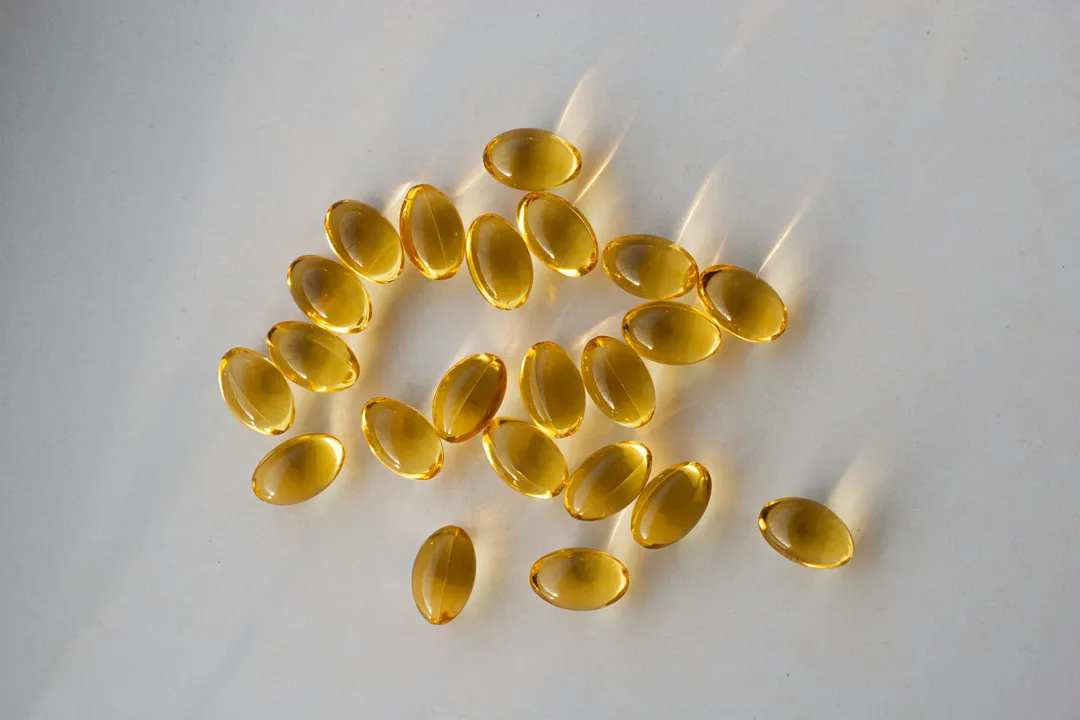
Fish oil is rich in two long-chain omega-3 fatty acids: eicosapentaenoic acid (EPA) and docosahexaenoic acid (DHA). VCA’s veterinarians describe EPA and DHA as anti-inflammatory and list the conditions fish oil is used for in pets, including skin allergies, arthritis, kidney disease and heart disease.
Plant omega-3s aren’t the same. Flaxseed and some other plant oils contain a different omega-3, alpha-linolenic acid (ALA). A veterinary nutritionist writing in Today’s Veterinary Practice notes that dogs convert ALA to EPA and DHA poorly, so a food’s ALA content shouldn’t be counted toward its EPA and DHA. When you read a label, look for EPA and DHA specifically.
Diet or supplement. Omega-3s can come from a separate fish oil product or from a food formulated with high levels, including some therapeutic joint and kidney diets. Your vet can tell you which route makes sense, and whether your dog’s current food already provides a meaningful amount. If your dog also has other health issues, our guide to the best supplements for senior dogs compares fish oil with glucosamine, green-lipped mussel, SAMe and probiotics.
Heart disease. For dogs with heart failure from mitral valve disease, the ACVIM’s 2019 consensus guidelines suggest considering omega-3 supplements, especially in dogs with a poor appetite, muscle loss or irregular heart rhythms. That’s a decision for your vet or cardiologist, and this guide focuses on joints, kidneys and skin.
Fish oil for arthritis in older dogs
Arthritis (osteoarthritis) is where fish oil has the most consistent support.
Systematic reviews. A 2012 systematic review in the Journal of Veterinary Internal Medicine looked at controlled trials of joint nutraceuticals in horses, dogs and cats. It concluded that the evidence was poor, “with the exception of diets supplemented with omega-3 fatty acids in dogs.” A 2022 systematic review and meta-analysis of 72 trials found “an evident clinical analgesic efficacy for omega-3-enriched diets, omega-3 supplements and cannabidiol (to a lesser degree).”
Key trials. Three randomized trials published in 2010 in the Journal of the American Veterinary Medical Association tested fish-oil-enriched dog foods:
| Study | Dogs | What they found |
|---|---|---|
| Roush et al., multicenter practice study | 127 dogs at 18 practices, 6 months | Owners reported dogs on the omega-3 food rose from rest and played better at 6 weeks, and walked better at 12 and 24 weeks. |
| Roush et al., force-plate study | 38 dogs at 2 university clinics, 90 days | Weight bearing on the worst leg, measured on a force plate, improved in 82% of dogs on the omega-3 food compared with 38% on the control food. |
| Fritsch et al., carprofen study | 131 dogs at 33 practices, 12 weeks | Dogs on the omega-3 food had their carprofen dose reduced significantly faster than dogs on the control food. |
A few caveats. These trials tested complete foods enriched with fish oil, not stand-alone supplements, and the carprofen study was led by researchers at a pet food company’s nutrition center. The force-plate study’s authors described the benefit as shown “at least in the short term.”
What vets say. The Merck Veterinary Manual says EPA supplementation and EPA-rich diets have been shown to improve gait and mobility in dogs and to have an “NSAID-sparing effect,” meaning some dogs may need less anti-inflammatory medication. That doesn’t mean fish oil replaces pain medication. Arthritis pain in older dogs usually needs a plan that combines weight control, exercise, pain relief and home changes. Our weak back legs guide explains what your vet will check first.
How long it takes. VCA says fish oil may take several weeks before full effects are seen, although gradual improvements are usually noticeable. In the trials above, owners reported improvement from about six weeks.
Fish oil and kidney disease
Chronic kidney disease is common in older dogs, and it’s one of the conditions that can make a dog drink a lot of water. Fish oil has a role here, but the evidence is different from arthritis.
Laboratory research. In a University of Georgia study published in 1998, dogs with surgically induced kidney disease were fed diets with added fish oil, safflower oil or beef fat for 20 months. The fish oil group had less protein in the urine and lower creatinine, and their kidneys showed less scarring. The authors concluded that omega-3s were protective, while omega-6-rich safflower oil made the kidney injury worse. It was a small study (seven dogs per group) in a laboratory model, not dogs with naturally occurring kidney disease.
Kidney diets. In Today’s Veterinary Practice, a board-certified veterinary nutritionist at the University of Tennessee explains that most therapeutic diets for kidney disease combine moderately restricted protein, phosphorus and sodium with moderately elevated omega-3s. She notes that diets high in omega-3s reduced pressure in the kidney’s filters and protein loss in dogs with experimentally induced disease, but that more studies are needed to tell which diet changes drive the benefit. The Merck Veterinary Manual says dogs with kidney disease fed renal diets live longer and go longer before a uremic crisis, and recommends renal diets from stage 2 onward.
What this means for you. If your dog has kidney disease, the kidney diet your vet recommends is the main tool, and it may already be enriched with omega-3s. Ask before adding fish oil on top, since your vet will want to account for what the diet already provides.
Fish oil for skin and coat
Fish oil is often marketed for shiny coats and itchy skin. The evidence for allergic skin disease (atopic dermatitis) is modest.
The International Committee on Allergic Diseases of Animals (ICADA), in its 2015 treatment guidelines, says oral essential fatty acids can influence skin lipids and improve coat gloss and quality, and “might also provide some small benefit” for dogs with atopic dermatitis. But the committee says the improvement is limited enough that fatty acids are unlikely to work as the only treatment, the benefit may take two months to appear, and there’s no evidence that any particular combination, dose or ratio is better. It also notes that enriched diets generally provide more essential fatty acids than supplements. Oral fatty acids aren’t useful for an acute flare.
If your older dog is newly itchy, the cause matters more than the supplement. Allergies, parasites, infections and hormone conditions can all look similar, so start with a vet visit.
Side effects and drug interactions
Fish oil is widely used and often well tolerated, but it isn’t risk-free. A 2013 review in the Journal of Veterinary Internal Medicine listed the important potential adverse effects of omega-3 supplementation in dogs and cats as altered platelet function, digestive upset, slower wound healing, lipid peroxidation (oxidation of fats in the body), nutrient excess and toxin exposure, weight gain, altered immune function, effects on blood sugar control and insulin sensitivity, and nutrient-drug interactions.
Common, milder effects. VCA lists mild stomach upset, a fishy odor, delayed wound healing, an oily coat, and itchiness or skin flaking.
Stop and call your vet right away, VCA says, if your dog shows signs of an allergic reaction (such as trouble breathing, a rash, fever, or puffiness and swelling around the face), unusual bruising or bleeding, signs of pancreatitis, appetite loss, or incoordination or seizures.
Use with caution, according to VCA, in dogs that:
- Take anticoagulants (blood thinners)
- Have a blood clotting disorder
- Have diabetes or a history of pancreatitis
- Have diarrhea
Drug interactions. VCA advises caution when fish oil is given with:
- Anticoagulants, such as warfarin
- NSAIDs, the anti-inflammatory pain drugs many arthritic dogs take, such as carprofen, meloxicam and robenacoxib
- Doxorubicin, a chemotherapy drug
The NSAID point surprises many owners, because fish oil is often used alongside those drugs. That’s exactly why your vet should know about it. They may want to adjust the pain medication over time, as in the carprofen trial above, or monitor your dog more closely.
Other practical points:
- Calories. Fish oil is fat, and the 2013 review lists weight gain among potential effects. Extra weight is hard on sore joints, so account for it in your dog’s daily calories. Our best senior dog food guide explains how to compare calorie density.
- Surgery and dental work. Because of the possible effects on platelets and wound healing, tell your vet and the surgical team about fish oil before any procedure.
- Cod liver oil isn’t the same product. It also contains vitamins A and D, and the 2013 review lists excess of those vitamins as a theoretical risk with some omega-3 products. Don’t swap one for the other without asking your vet.
- Bring a list. VCA reminds owners that vitamins and supplements can interact with each other and with medications, so tell your vet about every product your dog takes.
Quality, oxidation and storage
EPA and DHA are fragile. A 2017 study on liquid fish oil supplements for pets in the European Journal of Lipid Science and Technology described omega-3 oils as “highly susceptible to lipid oxidation,” and found that adding antioxidants such as mixed tocopherols (a form of vitamin E) and rosemary extract improved stability. Oxidation is also on the 2013 veterinary review’s list of potential concerns.
How common is rancid fish oil? There’s little published testing of pet products. In a 2024 study in the Journal of Dietary Supplements, researchers measured oxidation in 72 omega-3 supplements sold for people in the United States between 2014 and 2020. About 13% of unflavored products, and 68% of flavored products, exceeded the industry’s voluntary upper limit for total oxidation. The study looked at human supplements, and some of its authors work for a supplement-testing company, but it shows that quality varies and that flavoring can make freshness harder to judge.
How to tilt the odds toward a good product:
- Look for the EPA and DHA amounts on the label, not just “fish oil” or “omega-3s.” Your vet needs those numbers to work out a dose.
- Choose a reputable source. VCA says not to use fish oil when a reputable source can’t be obtained, because some sources carry a high risk of heavy metal contamination.
- Check for quality signals. The National Animal Supplement Council’s Quality Seal means the company passed an independent audit of its manufacturing, labeling and adverse event reporting. It isn’t proof that a product works. Our best supplements guide explains what the seal does and doesn’t mean.
- Prefer products made for dogs, and ask your vet before using one made for people.
- Store it properly. VCA advises storing fish oil in a cool, dry place, protected from light, and following the maker’s instructions, including any refrigeration advice. Keep the cap tight, buy a size you’ll finish before the expiry date, and keep it out of reach of pets.
- Trust your nose a little. A strong, sharp or unusual smell is a reason to set a bottle aside and ask the maker or your vet. But normal fish oil smells fishy, and flavorings can mask rancidity, so smell alone isn’t a reliable test.
Dose: a conversation for your vet
We don’t give fish oil doses on SeniorPupLife. The right amount depends on why your dog is taking it, their weight and health, what their food already contains, and their other medications. The amounts used in arthritis and kidney research are also far higher than what’s in many everyday foods. Bring these questions to your vet:
- What are we trying to help, and how will we know if it’s working?
- Would a therapeutic diet that’s already high in EPA and DHA be simpler?
- How much EPA and DHA should my dog get, and from which product?
- Could it interact with my dog’s medications, especially NSAIDs or blood thinners?
- How long should we try it before deciding?
Frequently asked questions
Is fish oil good for old dogs?
For arthritis, the evidence is encouraging: trials found better mobility, and one found dogs could reduce their pain medication. For kidney disease and skin allergies, the evidence is weaker. Whether it’s right for your dog depends on their health and medications, so ask your vet.
Can I give my senior dog human fish oil?
Ask your vet first. The dose depends on the EPA and DHA content and your dog’s weight and health, and products for people may contain other ingredients your vet will want to check.
How long does fish oil take to work in dogs?
VCA says it may take several weeks to see full effects. In the 2010 arthritis trials, owners noticed changes from about six weeks.
What are the side effects of fish oil in dogs?
The most common are mild stomach upset, fishy breath or skin, an oily coat and delayed wound healing. Call your vet right away for signs of an allergic reaction, unusual bleeding or bruising, pancreatitis, appetite loss, or incoordination or seizures.
Can dogs take fish oil with carprofen or other NSAIDs?
Many do, under a vet’s supervision. VCA lists NSAIDs among the drugs to use with caution alongside fish oil, so tell your vet before you start it. In one trial, dogs on a fish-oil-enriched food were able to lower their carprofen dose over time.
Is fish oil better than glucosamine for senior dogs?
The research favors fish oil. A 2022 meta-analysis found pain-relief effects for omega-3s but “a very marked non-effect” for glucosamine-chondroitin products. Our best supplements for senior dogs guide covers both.
Is flaxseed oil as good as fish oil for dogs?
No. Flaxseed provides ALA, and dogs convert ALA to EPA and DHA poorly.
The bottom line
Fish oil for senior dogs has its strongest support for arthritis, with trials showing better mobility and less need for pain medication in some dogs. Kidney diets use omega-3s as part of a bigger nutrition plan, and the benefit for skin allergies is likely small. Fish oil can upset the stomach, affect bleeding and wound healing, add calories and interact with common drugs, and it can go rancid. Choose a product that states its EPA and DHA content, store it carefully, and let your vet set the dose.
Not veterinary advice: This article is for general information and isn’t a substitute for professional veterinary advice. Always talk with your veterinarian before changing your dog’s diet, supplements or medications, or if you notice new symptoms.
Sources
Sources checked November 16, 2026. We haven’t tested any products, don’t name brands, and don’t give doses.
- Vandeweerd JM, Coisnon C, Clegg P, et al. Systematic review of efficacy of nutraceuticals to alleviate clinical signs of osteoarthritis. Journal of Veterinary Internal Medicine, 2012.
- Barbeau-Grégoire M, Otis C, Cournoyer A, Moreau M, Lussier B, Troncy E. A 2022 systematic review and meta-analysis of enriched therapeutic diets and nutraceuticals in canine and feline osteoarthritis. International Journal of Molecular Sciences, 2022.
- Roush JK, Dodd CE, Fritsch DA, et al. Multicenter veterinary practice assessment of the effects of omega-3 fatty acids on osteoarthritis in dogs. Journal of the American Veterinary Medical Association, 2010.
- Roush JK, Cross AR, Renberg WC, et al. Evaluation of the effects of dietary supplementation with fish oil omega-3 fatty acids on weight bearing in dogs with osteoarthritis. Journal of the American Veterinary Medical Association, 2010.
- Fritsch DA, Allen TA, Dodd CE, et al. A multicenter study of the effect of dietary supplementation with fish oil omega-3 fatty acids on carprofen dosage in dogs with osteoarthritis. Journal of the American Veterinary Medical Association, 2010.
- Merck Veterinary Manual. Osteoarthritis in dogs and cats.
- Brown SA, Brown CA, Crowell WA, et al. Beneficial effects of chronic administration of dietary omega-3 polyunsaturated fatty acids in dogs with renal insufficiency. Journal of Laboratory and Clinical Medicine, 1998.
- Witzel Rollins A. Feeding dogs with chronic kidney disease: what the evidence can and can’t tell us (PDF). Today’s Veterinary Practice, 2018.
- Merck Veterinary Manual. Renal dysfunction in dogs and cats.
- Olivry T, DeBoer DJ, Favrot C, et al. Treatment of canine atopic dermatitis: 2015 updated guidelines from the International Committee on Allergic Diseases of Animals (ICADA). BMC Veterinary Research, 2015.
- Lenox CE, Bauer JE. Potential adverse effects of omega-3 fatty acids in dogs and cats. Journal of Veterinary Internal Medicine, 2013.
- VCA Animal Hospitals. Fish oil.
- Thomsen et al. Improving oxidative stability of liquid fish oil supplements for pets. European Journal of Lipid Science and Technology, 2017.
- Hands JM, Anderson ML, Cooperman T, Frame LA. A multi-year rancidity analysis of 72 marine and microalgal oil omega-3 supplements. Journal of Dietary Supplements, 2024.
- Keene BW, Atkins CE, Bonagura JD, et al. ACVIM consensus guidelines for the diagnosis and treatment of myxomatous mitral valve disease in dogs. Journal of Veterinary Internal Medicine, 2019.
- National Animal Supplement Council. NASC Quality Seal.
Related guides
- Browse all Joints & supplements guides
- Best supplements for senior dogs: what the evidence says
- Senior dog back legs weak? Causes, red flags and what to do
- Older dog drinking a lot of water: what it can mean
- Best senior dog food (2026): how to choose, plus label-checked options
Written by the SeniorPupLife Editorial Team. Last updated: November 16, 2026. Sources last checked November 16, 2026; we plan to recheck them by May 2027. This article has not been reviewed by a veterinarian.