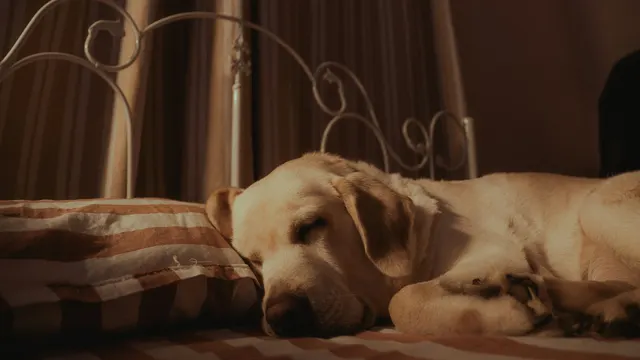
Dog dementia: signs and a sundowning night plan
Not veterinary advice: This article is for general information and isn’t a substitute for professional veterinary advice. Always talk with your veterinarian before changing your dog’s diet, supplements or medications, or if you notice new symptoms.
Your older dog is up and walking the house at 2 a.m., stuck in a corner, or staring at a wall, and during the day they sleep through everything. Here’s the short version: these can be signs of canine cognitive dysfunction, the condition most people call dog dementia, but pain, vision or hearing loss, and other illnesses can look the same, so the first step is a vet visit, not a home diagnosis. While you wait, a handful of changes to the night routine can make the nights easier for both of you.
Key takeaways
- “Dog dementia” has a medical name: cognitive dysfunction syndrome (CDS). Cornell says dogs may start to develop it around nine years of age or older, and that it may be underdiagnosed because the changes are gradual.
- Night restlessness is often the first thing owners notice. Cornell’s sleep-wake description is wandering at night and sleeping more during the day.
- Other problems mimic it. Cornell lists pain, arthritis, seizure disorders, systemic illness, and vision or hearing loss. AAHA calls CDS a diagnosis of exclusion.
- A night plan can help: Cornell suggests nightlights, an extra walk right before bed, a steady routine and blocking off unsafe areas.
- Talk to your vet before adding melatonin or any supplement. Cornell says to discuss melatonin first.
- Sudden head tilt, circling or inability to stand is not dementia. Cornell describes vestibular syndrome as a sudden-onset balance problem. See our guide to old dog vestibular disease. Call your vet right away.
What dog dementia is
Cornell describes cognitive dysfunction syndrome as a common age-related disease of the brain that causes deterioration similar to Alzheimer’s disease in people. It is caused by gradual, degenerative changes in the brain, including a build-up of a protein called beta-amyloid (Cornell: Cognitive dysfunction syndrome).
How common is it? The 2023 AAHA Senior Care Guidelines say approximately 14 to 22.5 percent of dogs older than 8 years suffer from age-related cognitive impairment, and that signs may not be recognized by owners in the early stages (AAHA). Both sources say early recognition matters, because management works best when it starts early.
Signs to watch for
Cornell and AAHA both use the acronym DISHAA to organize the signs. Cornell’s behavior expert, Dr. Katherine Houpt, suggests using the DISHAA guide to track changes and then bringing your notes to your vet.
| Letter | What it stands for | What you may see (Cornell, AAHA) |
|---|---|---|
| D | Disorientation | Getting lost in familiar places, getting stuck in corners and not knowing how to back out, staring into space, not recognizing familiar people or animals |
| I | Interactions | Suddenly clingy or avoidant, ignoring family members, hiding when company comes over |
| S | Sleep-wake cycles | Wandering the house at night, whining, barking or howling, sleeping more during the day |
| H | House soiling | Accidents in a dog who was house-trained, often without asking to go out |
| A | Activity | Pacing, restlessness, or less interest in play and walks |
| A | Anxiety | New phobias, irritability, anxiety in social situations, sometimes aggression |
AAHA says the most common signs in dogs are daytime sleeping and nighttime restlessness, decreased interaction, disorientation at home, and anxiety. Cornell adds that dogs with CDS may stop responding to commands they used to know or struggle to learn new ones. On house soiling, Cornell calls it a “major red flag” for families, and advises a vet visit to rule out a bladder infection first.
What “sundowning” means for dogs
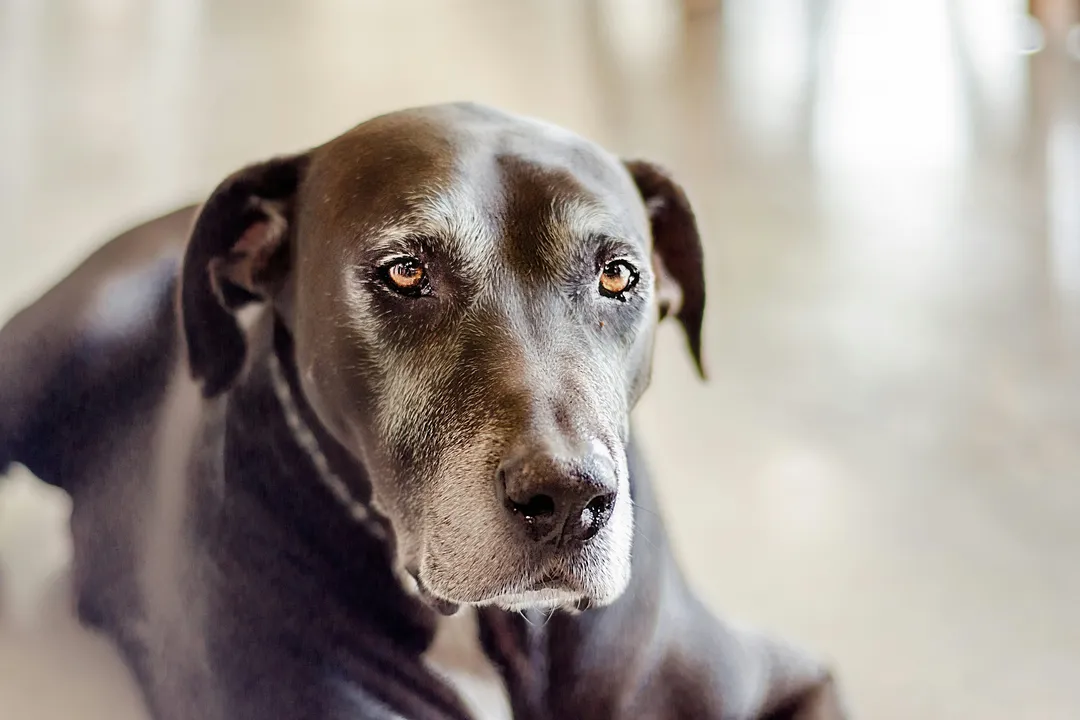
You’ll hear the word “sundowning” for signs that get worse in the evening or at night. Cornell uses the term “sun-downer syndrome” and describes it as worsening symptoms and irritability that occur at night. It says many aging dogs develop “midnight walks,” roaming through the house at night. It also describes the sleep-wake change as often the first sign that families notice, and notes it can disrupt everyone, especially if the dog gets stuck and fusses for help.
We didn’t find a source that explains exactly why signs worsen at night, so we won’t guess. What the sources do give is practical ways to manage it.
Step 1: Rule out other causes first
Before you decide it’s dementia, your vet needs to look for other causes. Cornell says a vet will do a thorough physical exam and recommend blood and urine tests to rule out other conditions with similar signs, such as pain, arthritis, seizure disorders, systemic illness, and vision or hearing loss. AAHA says cognitive dysfunction may be a diagnosis of exclusion, and names intracranial tumors, pain and organ dysfunction among the other possibilities. In some cases an MRI is recommended.
Pain is worth a special mention for night restlessness. AAHA’s pain guide says painful pets may become restless and anxious as they struggle to get comfortable, and may pace, circle, or frequently change positions (AAHA: Common pet pain signs). Our guide to a senior dog panting and restless at night walks through what to check.
Not dementia: sudden balance problems. Cornell says vestibular syndrome is often confused with CDS but is a sudden-onset balance problem. The dog may circle with the head tilted, or be unable to stand, may seem nauseated, and may have eyes that move rapidly side to side, up and down or in circles. See our guide to old dog vestibular disease. Call your vet right away if you see this.
Step 2: A night plan for a dog who wanders
Cornell’s advice for “midnight walks” and general safety is a good starting point. None of this replaces your vet’s advice, but each step is low-risk.
- Add nightlights. Cornell says nightlights help dogs see clearly and make them less likely to get stuck.
- Take one more walk right before bed. Cornell says for some dogs this wears them out and leads to longer, deeper sleep.
- Keep the routine steady. Cornell says most senior dogs prefer a set routine for the important things, such as meals, and recommends keeping walks on a schedule, not moving dog beds or furniture, and keeping food and water bowls in the same place.
- Block off unsafe areas. Cornell suggests blocking stairways, where a dog could stumble and fall, and the space behind the couch, in case the dog wanders back there and can’t figure out how to get out.
- Offer a quiet place to rest. Cornell says some dogs prefer their crate in a quiet room for extra security, and recommends having a room where a dog who wants to opt out of company can rest.
- Announce yourself if hearing is fading. If your dog is asleep, Cornell suggests speaking as you approach and stamping your foot so they can feel the vibration through the floor.
- Talk to your vet before using melatonin. Cornell says melatonin helps some dogs, but there aren’t many studies confirming its effects, and says to discuss it with your veterinarian before using it. Don’t give your dog a dose on your own.
- Check the ID. Cornell says to make sure your dog wears identification at all times, and that microchip information and collar phone number are current, because a confused dog who gets out may not find the way home.
A practical idea of ours, not from the sources: keep a short note on your phone each night with the time your dog woke, what they did, and how long it lasted. Your vet can use it, and it’s easier than remembering later. It also fits Cornell’s advice to track the DISHAA categories and bring your notes to a visit.
Step 3: Daytime changes that can help
Cornell says older dogs do better with a predictable routine but benefit from low-level enrichment. Its suggestions:
- Sniff walks. Cornell recommends sniff walks, as opposed to exercise walks, and says many dogs keep their sense of smell right up to the end.
- Food puzzles and snuffle mats. Cornell says simple food puzzles and snuffle mats are helpful, especially on bad-weather days. Match any trick or toy to your dog’s physical abilities.
- Scent-work games. Simple hides in your house or yard.
- Extra daytime walks. If your dog is having accidents, Cornell suggests more walks to give more chances to eliminate. See your vet first to rule out a bladder infection. Cornell says “doggy diapers” are an option for dogs who don’t mind them, but they need to be changed frequently so hair doesn’t stay wet and cause skin sores. Our guide to senior dog peeing in the house covers diapers, bedding and other causes of accidents in more detail.
- Regular checkups. Cornell recommends exams at your vet at least every six months, plus monthly or even weekly checks at home.
Cornell and AAHA also note that anxiety is part of this condition, and AAHA says it should not be overlooked.
What your vet may suggest
There is no one treatment or cure, according to Cornell, and research is ongoing. It says early intervention with diet, enrichment and medication can help slow progression and improve quality of life, and that other conditions such as arthritis and obesity need to be treated too. Options your vet may discuss include:
- A prescription diet. Cornell says certain prescription diets are rich in antioxidants, fatty acids and other nutrients that support the brain. AAHA says diets high in antioxidants and medium-chain triglycerides showed the most positive effect when combined with environmental enrichment.
- Selegiline. AAHA says it is the only drug labeled for use for canine cognitive dysfunction, and Cornell says it’s approved for CDS treatment in North America. Cornell says some owners notice improvement in three weeks or less, while many dogs take six weeks. AAHA warns that toxicity can occur if selegiline is used with certain other drugs, so your vet needs the full list of everything your dog takes.
- Treatment for pain and anxiety. AAHA says pain treatment, along with anxiety medication where appropriate, should be considered in a dog with cognitive impairment.
- Supplements. Cornell says a number of supplements may help when combined with the other steps, but to consult your veterinarian before starting any. AAHA says the quality and rigor of research on supplements and nutraceuticals is limited.
Only your vet can say which, if any, fits your dog. We don’t give doses.
When to call your vet
Call your vet if your older dog:
- Is wandering at night, seems confused, gets stuck, or is having new accidents.
- Has changes in how they interact with the family, or new anxiety.
- Has a sudden change, such as a head tilt, circling, trouble standing, or a seizure.
- Seems to be in pain, or is restless and can’t get comfortable.
Call your vet or an emergency clinic right away if your dog collapses, has labored or noisy breathing, has pale or blue gums, a swollen or hard belly, sudden paralysis or inability to stand, a seizure, repeated vomiting, or hasn’t eaten or had water for 24 hours or more. This list isn’t complete. If something feels wrong, trust your instinct and call.
Frequently asked questions
What are the first signs of dementia in dogs?
Cornell describes the sleep-wake change as often the first sign that families notice: a dog who is up and walking around in the middle of the night and sleeping more during the day. AAHA lists daytime sleeping and nighttime restlessness, decreased interaction, disorientation at home and anxiety as the most common signs.
At what age does dog dementia start?
Cornell says dogs may start to develop CDS around nine years of age, or older. AAHA’s prevalence figure applies to dogs older than 8 years. Signs often build slowly, so they can be mistaken for normal aging.
Is my dog’s night wandering dementia or something else?
It could be either, and only a vet exam can tell. Pain, arthritis, seizure disorders, systemic illness, and vision or hearing loss can look similar, according to Cornell. Your vet may recommend blood and urine tests.
Can melatonin help my dog sleep through the night?
Cornell says melatonin helps some dogs, but there aren’t many studies to confirm its effects, and recommends discussing it with your veterinarian before using it. We don’t give doses.
Is dog dementia painful?
We didn’t find a source that says CDS itself is painful. But pain from other conditions, such as arthritis, can cause restlessness and can occur at the same time, and AAHA says pain treatment should be considered in a dog with cognitive impairment. Your vet can sort out which is which.
Can dog dementia be cured?
No. Cornell says there is no one treatment or cure for CDS. It says early intervention with diet, enrichment and medications can help slow its progression and improve quality of life, and that dogs who are severely affected or who have other medical problems often have a worse prognosis.
Is it dementia if my dog has accidents in the house?
It can be, and Cornell calls house soiling a major red flag. But accidents can also come from a bladder infection or other illness, which is why Cornell advises a vet visit first.
The bottom line
Night wandering, confusion and a flipped sleep schedule in an older dog are worth a vet visit, not a guess. Once other causes are ruled out, a steady routine, a safe and lit house, an extra walk before bed, daytime enrichment and your vet’s guidance on diet or medication can make a real difference. Track what you see, bring your notes, and ask what your vet recommends for your dog.
Not veterinary advice: This article is for general information and isn’t a substitute for professional veterinary advice. Always talk with your veterinarian before changing your dog’s diet, supplements or medications, or if you notice new symptoms.
Sources
All pages below were opened and read on November 4, 2026.
- Cornell University College of Veterinary Medicine, Riney Canine Health Center. Senior dog dementia.
- Cornell University College of Veterinary Medicine, Riney Canine Health Center. Cognitive dysfunction syndrome (updated October 21, 2025).
- AAHA. 2023 AAHA Senior Care Guidelines for Dogs and Cats: Managing cognitive dysfunction and behavioral anxiety.
- AAHA. What’s Wrong? Common Pet Pain Signs.
Related guides
- Toys for senior dogs: gentle enrichment for older minds and bodies
- Senior dog panting at night and restless: what to check first
- Senior dog back legs weak? Causes, red flags and what to do
- Old dog vestibular disease (old dog syndrome): signs and recovery
- Signs your dog may be dying of old age, and what to do
- Senior dog slipping on hardwood floors: a room-by-room fix
- When is a dog considered senior? Age by size and breed
- Senior dog peeing in the house: causes, what helps, and diapers
- Dog dementia treatment options (coming soon)
- Browse all Health guides
Written by the SeniorPupLife Editorial Team. Last updated: November 4, 2026. Sources last checked November 4, 2026; we plan to recheck them by May 2027. This article has not been reviewed by a veterinarian.